Obsessions and Compulsions in OCD
About Obsessions
Obsessions are unwelcome and distressing ideas, thoughts, images, or impulses that repeatedly enter your mind. They may seem to occur against your will. They may be repugnant to you, you may recognize them as senseless or excessive, and they may not fit your personality.
Recurrent thoughts, images, or impulses experienced as intrusive and inappropriate, causing marked anxiety or distress
Not simply excessive worries about real life problems
Accompanied by efforts to ignore, suppress, or neutralize thoughts
Recognized as the product of one's own mind
About Compulsions
Compulsions, on the other hand, are behaviors or acts that you feel driven to perfom although you may recognize them as senseless or excessive. At times you may try to resist doing them but this may prove difficult. You may experience anxiety that does not diminish until the behavior is completed.
Repetitive behaviors and mental acts that the person feels driven to perform in response to an obsession or according to rigid rules
Aimed at preventing or reducing distress or preventing some dreaded event or situation clearly excessive or not realistically connected to the obsessive fear PET Scan
Diagnostic Criteria for OCD
At some point the person has recognized that behaviors are excessive or unrealistic
Obsessions and compulsions cause distress, are time consuming, and significantly interfere with functioning
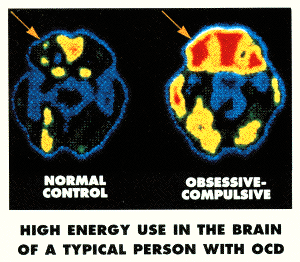
The content of obsessions and compulsions cannot be accounted for by another disorder PET scans indicate differences in brain activity of OCD patients versus normals
Epidemiology
OCD has a one-month prevalence of 1.3%
OCD has a lifetime prevalence of 2.5%
Four millions adult Americans have OCD
Factors contributing to underestimation of OCD prevalence
Patients resist disclosing 'crazy' symptoms
Failure to screen for OCD during MSE
Difficulties in differential diagnosis
Compulsions
Common Compulsions
Checking
Washing and Cleaning
Repetition of Normal Activities
Ordering or Arranging
Saving or Collecting
Mental Compulsions
Special words, images, and numbers recreated mentally to reduce anxiety
Repetition of special prayers
Mental counting
Mental list making
Mental reviewing
Incidence of Compulsions by Percentage
Checking: 28.1%
Cleaning/Washing: 25.9%
Mental: 11.5%
Repeating: 11.0%
Ordering/Arranging: 5.3%
Hoarding/Collecting: 3.2%
Counting: 2.6%
Miscellaneous: 12.4%
Obsessions
Common Obsessions
Contamination: Dirt, germs, bodily waste, chemicals
Mistakes: Locks, appliances, paperwork, decisions
Impulses: Violent, sexual, religious, embarrassing
Order: Neatness, symmetry, numbers
Incidence of Obsessions by Percentage
Contamination: 32.9%
Aggression: 16.6%
Need for Exactness: 8.5%
Religious: 6.3%
Somatic: 6.2%
Sexual: 5.3%
Hoarding/Saving: 4.0%
Miscellaneous: 20.2%
Obsession-Compulsion Relationship
Compulsions may fall into any of the following categories:
Are intended to prevent harm
Have nothing to do with harm, they just reduce discomfort
Are done automatically without purpose
Relationship between obsessions and compulsions is unclear
OCD is Reinforced by Learning
Obsessions give rise to anxiety or distress
Compulsions reduce obsessional anxiety
Performance of compulsions prevents the extinction of obsessional anxiety
Compulsions are negatively reinforced by the brief reduction in anxiety they engender
The OCD Cycle
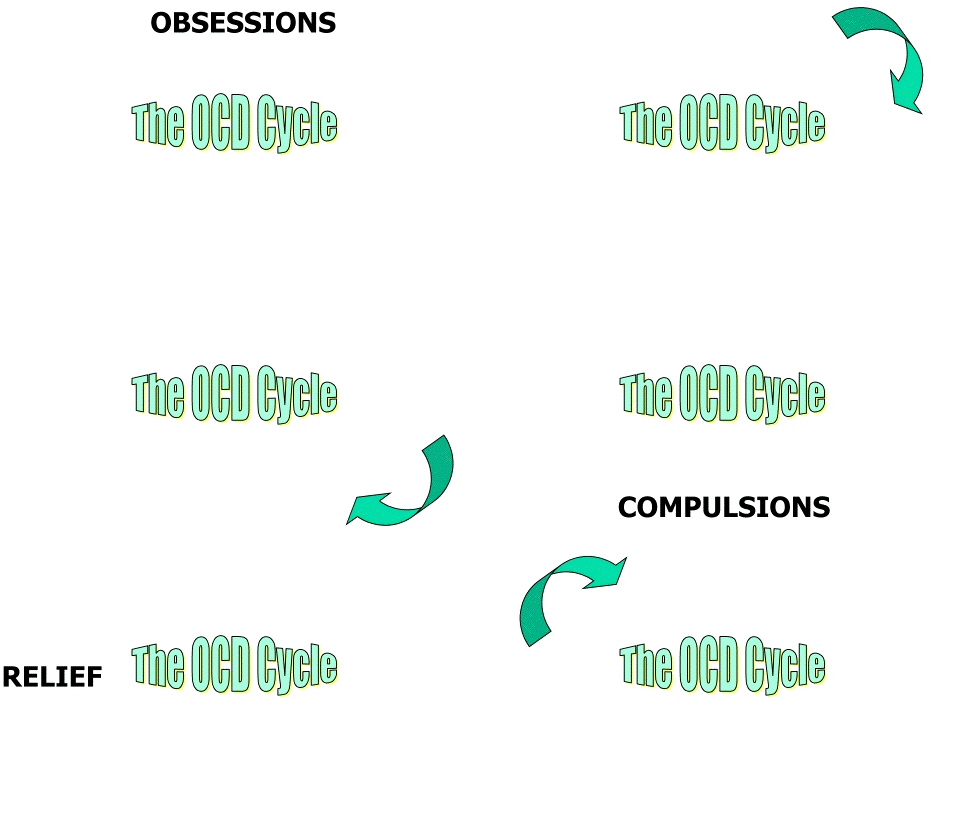
The picture below represents the typical cycle of a person suffering from OCD. Obsessions cause anxiety, causing the sufferer to engage in compulsions in an attempt to aleviate the distress caused by the obsessions. Carrying out these compulsions, or rituals, does not result in any permanent change, and in fact, the OC symptoms worsen.
Comorbid Conditions
Incidence of Comorbid Conditions
Depression: 30%
Simple Phobia: 30%
Social Phobia: 20%
Panic Disorder: 15%
Tourette's Syndrome: 36-52%
Sleep Disorder: 40%
Eating Disorders: 10%
Bulimia: 33%
More about OCD comorbidities.
Effective Treatments for OCD
There are many effective treatments for OCD, alone or in combination. However, behavioral therapy produces the best and most durable results.
Drug Therapies
Behavioral Therapy
Medication with Behavioral Therapy
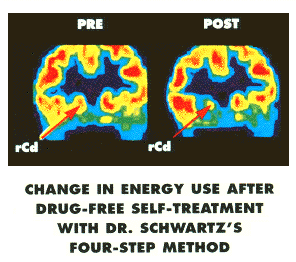
PET scans of OCD patients show the same reductions in brain caudate nucleus activity (center of brain) that occur following successful drug treatment are also produced by successful behavior therapy.